
WordPress and WooCommerce
Custom themes, blocks, admin screens, secure plugins, e-commerce extensions, API connectors, performance audits and practical editorial workflows.
Choose a CMS that editors actually enjoy and extend it with custom plugins, headless architectures, content workflows and integrations that fit your business.
Talk about your project ↗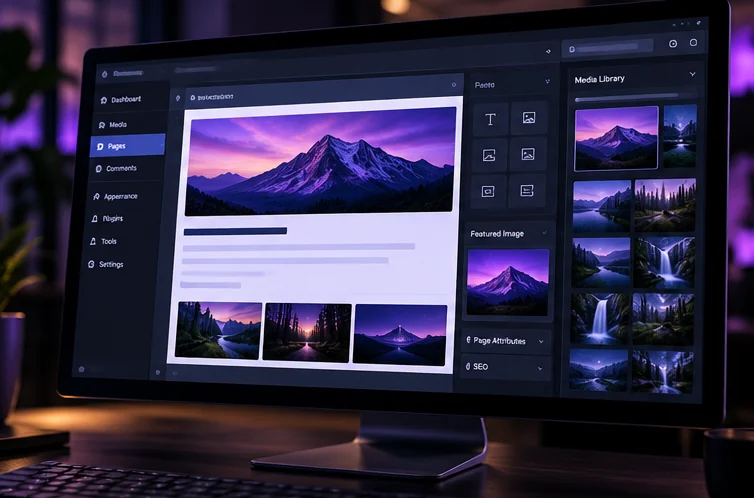
Your content management system should support your publishing workflow rather than dictate how your business operates. We help teams choose, customize, migrate and extend CMS platforms—whether that means a traditional WordPress website, a Joomla installation or a headless CMS powering several digital channels.
When standard features are not enough, we build custom plugins, modules, extensions and API integrations so your platform works with the tools and rules that matter to you.
The right CMS makes content updates faster, separates editorial responsibilities clearly and avoids unnecessary dependency on developers for routine changes.
Focused on the outcomes your company needs—not another box-checking feature list.
Custom themes, blocks, admin screens, secure plugins, e-commerce extensions, API connectors, performance audits and practical editorial workflows.
Custom modules, templates, content modeling, modernization, maintenance and migration planning for established content-heavy sites.
Content models, roles, preview experiences, media libraries and APIs for Next.js websites and mobile apps using Payload, Directus, Strapi, Sanity, Contentful or DatoCMS.
Purpose-built extensions for CMS platforms, Shopify and WooCommerce; integrations with CRMs, payments, forms, data sources and Cloudflare R2 media storage.
Your content management system should make publishing easier, not dictate what your business is allowed to build. Some organizations need a familiar editor with pages, media and publishing controls. Others need structured content shared across websites, apps and digital displays. We help choose and extend the right approach based on the people editing content, the experiences you need to deliver, and the systems already in use. For traditional CMS projects, that can mean WordPress, Joomla or Drupal, including custom themes, extensions and carefully designed editorial workflows. For headless projects, we can evaluate Payload, Directus, Strapi, Sanity, Contentful and DatoCMS, integrating their APIs with Next.js or other front ends. We also develop custom WordPress and WooCommerce plugins, Shopify extensions and middleware that connect CRMs, payment systems, search, storage and other services. Instead of accumulating plugins that conflict with one another, we design extensions around clear requirements and maintainable interfaces. You gain a publishing workflow your team can understand, with the freedom to create experiences that standard templates and plugins cannot support.
Let's plan your project ↗From established platforms to modern development stacks, the best fit depends on how your team works and where you want to go.
 WordPress
 WooCommerce
 Joomla
 Drupal
 Directus
 Strapi
 Sanity
 Contentful
 DatoCMS
 GraphQL
 Cloudflare R2
Platform marks load from a public icon library when available. Platform names remain visible regardless.
Audit current content, extensions and editorial pain points
Compare CMS platforms and design content models
Develop workflows, roles, plugins and integrations
Migrate and validate content with redirects where needed
Train editors and establish upgrade and maintenance procedures
A headless CMS manages content separately from the website or app that displays it. It is useful when content feeds multiple channels or a custom frontend is required. Traditional CMS platforms can be simpler for smaller editorial teams.
Yes. We can build purpose-specific plugins or modules that add admin screens, integrate external services and apply business rules, with maintenance and compatibility in mind.
There is no universal winner. Payload suits teams wanting a code-centric TypeScript setup, Directus works well around structured databases, and hosted options such as Sanity, Contentful and DatoCMS serve different editorial needs. We compare visual editing, API support, media and hosting requirements.
Yes, where a suitable supported integration is available or can be implemented. We consider asset URLs, access controls, transforms, caching and editorial experience.